
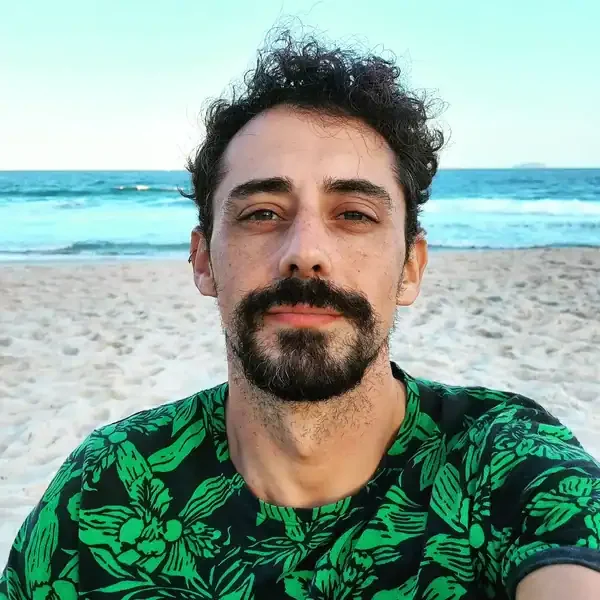
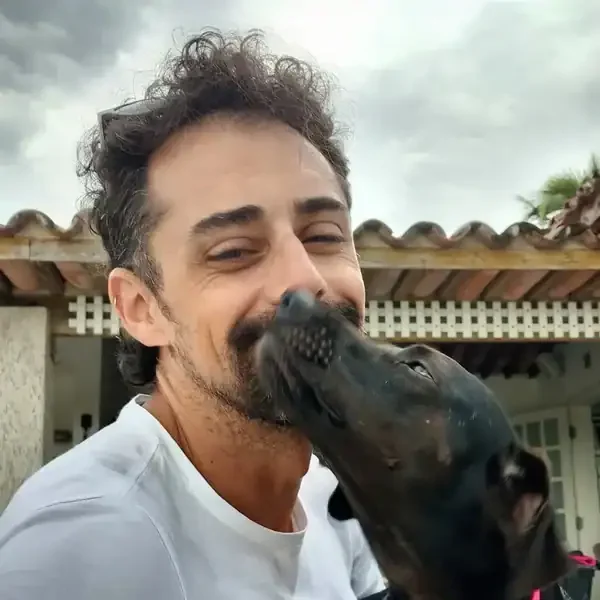

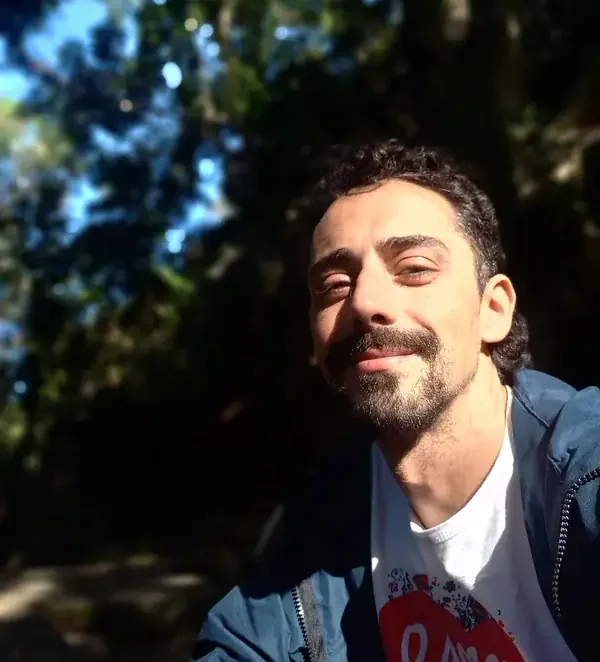


Professor André Aires, who is hospitalized in critical condition after being beaten in downtown Rio de Janeiro while trying to defend a woman experiencing violence, showed brief signs of waking during a hospital visit on Saturday, Nov. 21. Friends said he moved one hand slightly, cried and opened his eyes before returning to a coma.
The response was first noticed by Camila, a friend who visited him. Another friend said on social media that he was told what had happened shortly afterward and went to André’s room to speak with him.
“During Camila’s visit, André moved his hand slightly and cried. She left the room and told me immediately. I went upstairs right away, and when I got there, I spoke to him a little. He opened his eyes and raised his body,” the friend wrote.
The response lasted only a short time. “It was a slight awakening; afterward, he returned to the coma, but the news is wonderful,” the friend added.
Friends also said André had developed pneumonia, although he had not been recorded as having a fever. They said doctors continued to monitor other aspects of his condition. “Some points still require attention and monitoring,” they reported.
André remains in critical condition. Doctors began gradually reducing his sedation on Wednesday, Nov. 18, but he has not regained consciousness. He has also undergone a tracheostomy to assist with mechanical breathing.
A tracheostomy is a procedure that creates an opening in the front of the neck into the windpipe, allowing a breathing tube to be placed there. It can be used to support a patient who needs mechanical ventilation. The procedure itself does not indicate that a patient is awake or able to breathe without assistance; those matters depend on the patient’s condition and the medical team’s assessment. In André’s case, friends said the procedure was performed to help with mechanical respiration.
The medical team had stabilized André’s blood pressure on Tuesday, Nov. 17. That was described as the first improvement in his clinical condition since he was admitted to the hospital. The brief response during Saturday’s visit was another development reported by friends, but it did not mean that he had recovered consciousness or left critical condition. They said he returned to a coma after opening his eyes.
The incident that led to André’s hospitalization took place on the morning of Sunday, Nov. 15, in downtown Rio. André, whose full name is André Luis de Oliveira and who is known artistically as André Aires, was walking his dogs with his boyfriend near Praça da Cruz Vermelha, according to the boyfriend’s account to authorities. They reportedly saw a man shouting at a woman and dragging her toward a street with fewer people around. The man was identified in the account as Victor Hugo de Araújo Palmeira.
According to information reported by UOL and details shared by André’s friends, André sought help from police officers and people passing by. Friends said officers intervened but left the area without arresting the suspect. They alleged that after the officers departed, the suspect joined six other men in attacking André.
The accounts also say André tried to escape by entering a bar, but the group pulled him back outside. The beating continued in the street until he lost consciousness. These details have been attributed to the accounts made public by friends and to information about the case; they describe the reported sequence of events and should be distinguished from the medical updates about André’s condition.
The Military Police said officers on Carlos de Carvalho Street saw André being beaten. According to the police account, André received assistance and Palmeira was arrested and taken to the 5th Police Precinct, which is responsible for investigating the case. The police statement and the account shared by friends describe different points in the sequence involving officers. The investigation is being handled by the precinct, and the information available in the report does not provide a final account of all the circumstances.
Friends said André suffered a traumatic brain injury and multiple injuries to his body. He was taken to Miguel Couto Hospital, where he underwent surgery. A traumatic brain injury refers to damage caused by an impact or other injury to the head. Its effects vary, and a person’s condition can require close medical observation and treatment. The report does not specify the full nature of André’s injuries or provide a detailed account of his surgery.
A coma is a state of prolonged unconsciousness in which a person cannot be awakened and does not respond normally to the surrounding environment. It differs from ordinary sleep, and its causes and duration can vary. In André’s case, friends described the movement, crying and eye opening during Saturday’s visit as a brief awakening, followed by his return to a coma. The reported response does not, by itself, establish the extent of his awareness or predict his recovery.
Sedation is medication used by medical teams to reduce a patient’s level of consciousness or help manage treatment. The report says doctors have been reducing André’s sedation gradually since Wednesday. A gradual reduction allows clinicians to monitor how a patient responds as the effect of medication is lessened. The article does not provide details about the medicines used, the pace of the reduction or the doctors’ expectations.
Pneumonia is an infection that inflames the air sacs in one or both lungs and can affect breathing. A fever is one possible symptom, but the absence of a recorded fever does not rule out pneumonia. Friends said André had developed the condition and remained under medical supervision. They did not provide further details about its severity or treatment.
At a custody hearing, a judge converted Palmeira’s arrest in the act into preventive detention. The judge, Marcelo Brito da Costa Honorato Santos, described the crime as “concretely serious” and referred to the circumstances in which André was found: unconscious, bloodied and unable to defend himself. Preventive detention is a court-ordered form of custody while a case proceeds; it is distinct from a final finding of guilt. The information provided does not state the ultimate outcome of the investigation or any later court proceedings.
For now, the updates about André’s condition have come from friends and information about his medical care. They have described the brief signs of response during the visit, the ongoing coma, the gradual reduction in sedation, the tracheostomy and the pneumonia. They have also emphasized that he remains in critical condition and continues to receive medical attention. The eye opening and movement were described as a meaningful development by those close to him, while the available information gives no timetable for further changes in his condition.